

If you’re saying, “I want to invest in commercial real estate in Fayetteville, NC. Where do I start?”, you’re asking the right question. The next step is understanding what you actually need, how commercial differs from residential, and who should be on your team.
This guide is written for new and early-stage investors who want a clear, practical path from curiosity to a realistic first deal in the Fayetteville market.
1. Get Clear on What You’re Trying to Achieve
Before you look at any building, get specific about why you want commercial real estate:
- Do you want long-term rental income?
- Are you hoping for appreciation and a future sale?
- Do you own a business and want to occupy part or all of the building?
- Are you trying to diversify beyond residential property?
Your “why” shapes everything else: which properties you consider, how much risk you can tolerate, and what parts of Fayetteville make sense for you.
Browsing actual listings can help clarify your goals. For example, reviewing current commercial property for sale in Fayetteville, NC will give you a feel for price ranges, locations, and building types that match your situation.
2. How Commercial Differs from Residential
If you have experience with houses or small rentals, some of the concepts will carry over. But commercial is not just “bigger residential,” and treating it that way is how investors get surprised.
Key Differences
- Leases drive value. Commercial leases often run for several years. They spell out rent, increases, renewals, and who pays which expenses.
- Tenants are businesses. You are evaluating the property and the tenant’s ability to operate and pay rent over time.
- Values track income, not just comps. In residential, comparable sales matter most. In commercial, net operating income and prevailing capitalization rates are more central to value.
- Vacancy can last longer. Turning over a house may take weeks. Finding a new commercial tenant can take months, depending on the property and submarket.
- Space is often more specialized. Build-outs, parking, signage, and zoning all matter in ways they usually do not in residential.
Because of these differences, a broker who works in commercial real estate in Fayetteville, NC every day can help you avoid misreading a deal that looks good on paper but does not fit the local market.
3. Choose a Property Type That Fits You
“Commercial real estate” in Fayetteville covers a wide range of properties. You do not have to pick one forever, but narrowing your focus will make your first steps more manageable.
Common Property Types You’ll See
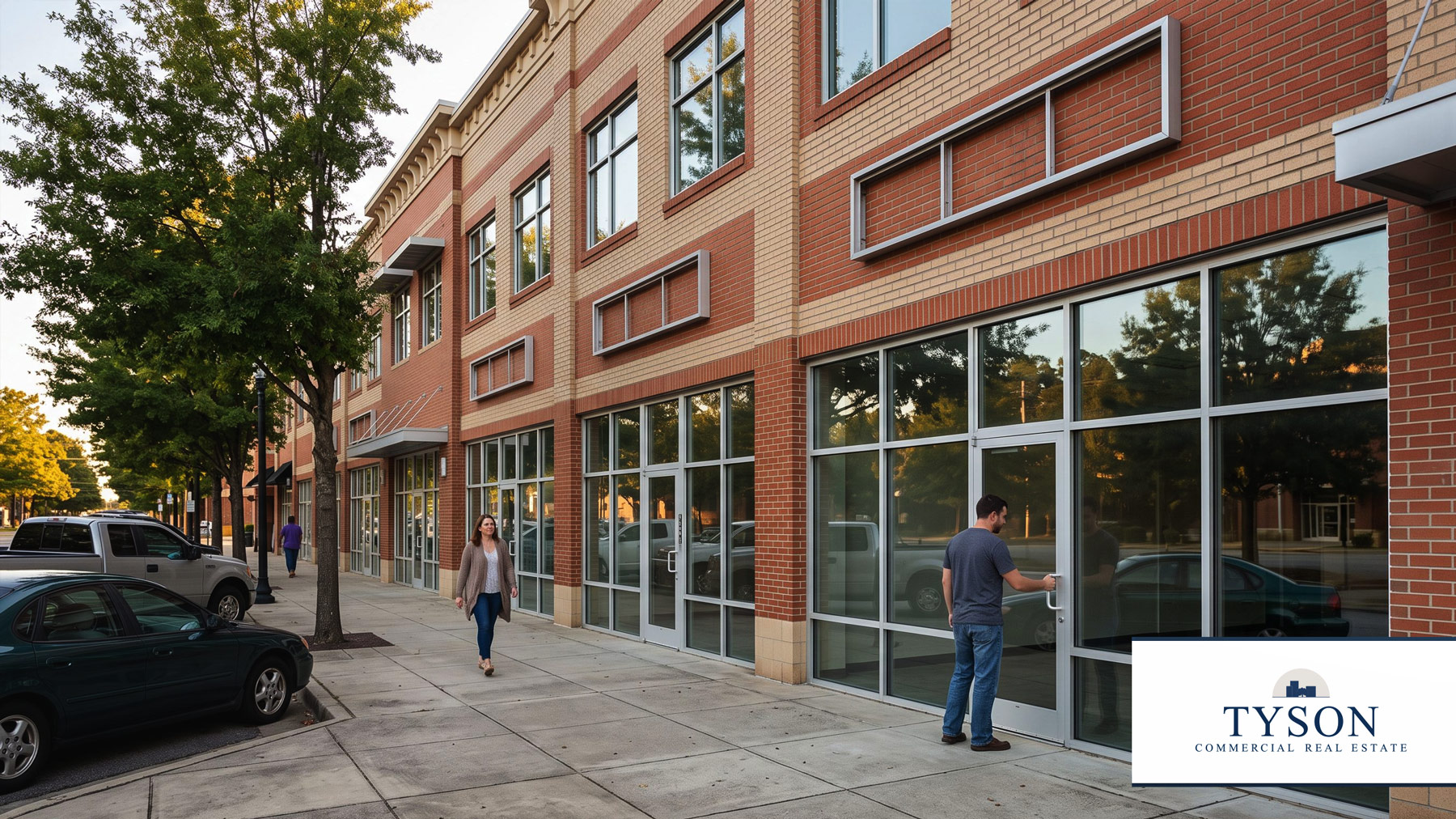
- Retail. Storefronts, strip centers, or stand-alone buildings along main corridors.
- Office. From small professional suites to multi-tenant buildings in and around downtown Fayetteville.
- Industrial and flex. Warehouses, light industrial, and flexible spaces that combine office and storage.
- Mixed-use. Buildings that combine retail and office, sometimes with residential units nearby.
- Land. Commercial or transitional land that could be held for future development as the region grows.
Spending time on actual properties helps this click. Walking a downtown building like 100 W Russell Street will feel very different from touring a suburban retail site or an industrial building on the edge of town.
4. Get Your Financial Foundation in Order
Commercial deals are driven by numbers. Sellers and lenders will expect you to be prepared.
What You’ll Typically Need
- A capital plan. A clear idea of how much cash you can bring for a down payment, closing costs, initial improvements, and reserves.
- A lending relationship. A conversation with a bank or lender that actively finances commercial properties in the Fayetteville area. Ask what they like to see from new investors.
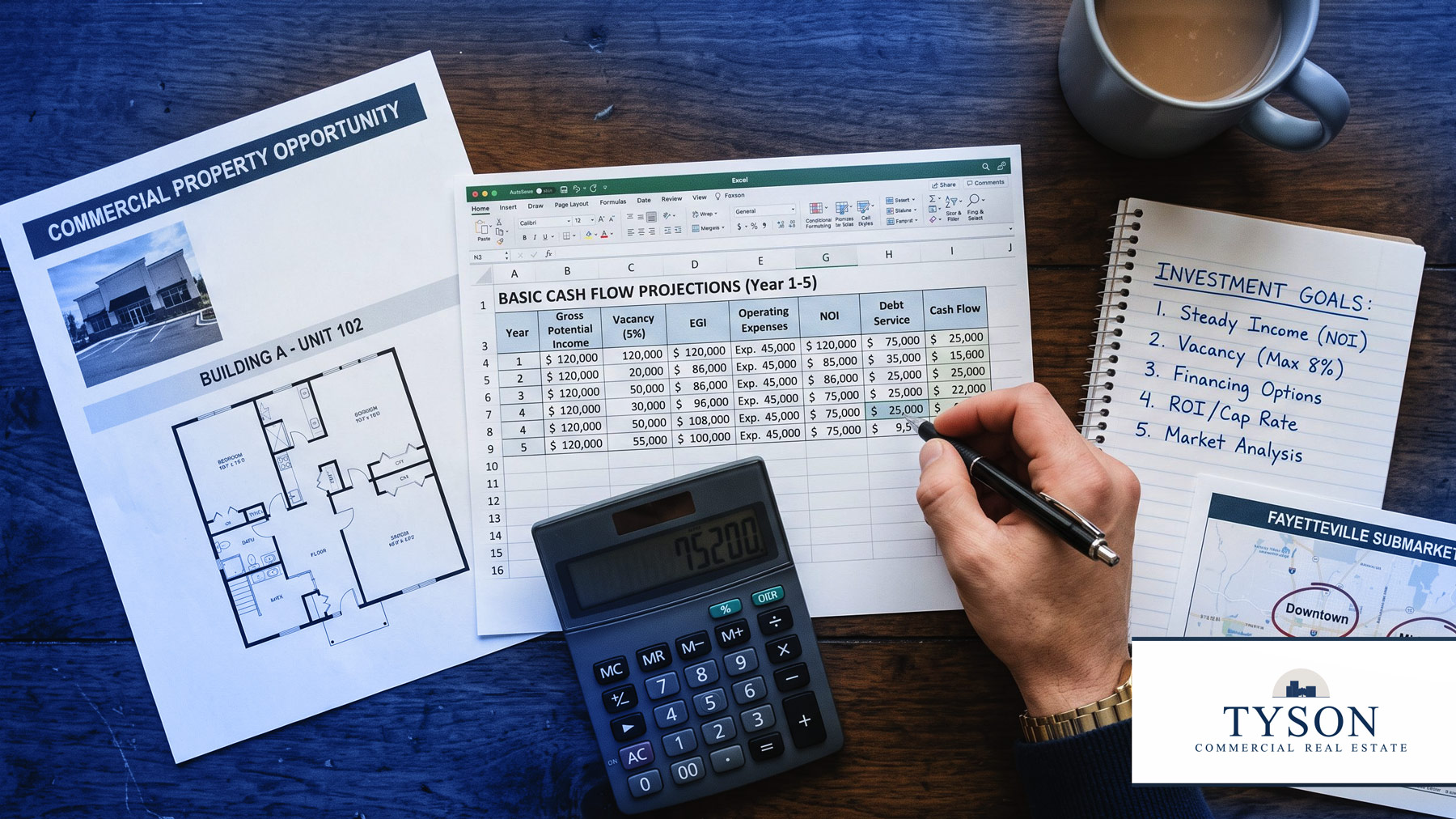
- Comfort with basic investment math. You should be able to read a simple income and expense statement, and understand how changes in rent or vacancy affect your returns.
You do not need to model every scenario in a spreadsheet, but you should be able to look at a property’s income and expenses and tell if it fits your risk and return expectations.
5. Build a Local Team Early
Trying to do commercial deals alone, especially in a city you are still learning, is a recipe for frustration. A small, reliable team can save you time and reduce mistakes.
Typical Team Members for a New Investor
- Commercial broker. Someone who works daily with commercial property in Fayetteville and knows what is actually selling and leasing, not just what is listed online.
- Lender or banker. A point of contact who can explain what they will and will not finance at your stage.
- Attorney. A lawyer who is familiar with commercial contracts and leases.
- Accountant or tax advisor. To help you think through entity choices and how income and expenses will be treated.
- Property manager. If you do not want to handle day-to-day issues or you plan to buy something with multiple tenants.
A broker who understands both the investment side and local landlord needs can also point you toward properties with existing track records. For instance, reviewing stabilized assets like 131 Pepsi Lane or established office locations such as Brookstone Lane Offices can give you a realistic sense of what “steady” looks like in this market.
6. Learn How Commercial Deals Are Evaluated
Once you start looking at actual opportunities, you will notice that commercial listings talk more about income and tenancy and less about finishes or décor.
Questions Investors Ask About Each Property
- Who is there now? Which tenants are in place, how long they are committed, and whether they are current on rent.
- What is the real income and expense picture? Not just pro forma projections, but actual numbers.
- What happens if a tenant leaves? How easy the space is to re-lease, and how specialized it is.
- Is there a credible path to better performance? For example, re-tenanting vacant space, modest improvements, or repositioning the property.
Looking at a mix of fully leased properties and those with some vacancy, such as 228–230 Winslow St, will help you see the tradeoff between stability and upside.
7. How Commercial Brokers Differ from Residential Agents
In residential real estate, many agents handle a little bit of everything. In commercial, brokers tend to specialize by property type, client type, or geography.
What a Commercial Broker Typically Does for a New Investor
- Helps you refine your investment criteria and budget into something realistic.
- Introduces you to on-market and sometimes off-market opportunities that match those criteria.
- Explains how different parts of Fayetteville are performing, and which areas fit your risk level.
- Guides you through offers, negotiations, and due diligence steps.
- Connects you with lenders, attorneys, inspectors, and managers when you need them.
A broker who spends their time in commercial real estate rather than splitting time with residential will usually have deeper insight into leases, local tenant demand, and how investors are actually structuring their deals.
8. Take a Structured First Step, Not a Blind Leap
You do not have to rush into a purchase to make progress. Treat your first 60 to 90 days as a focused learning period with concrete actions.
A Practical Short-Term Plan
- Talk with a commercial lender about what they can realistically lend to you today.
- Meet with a commercial broker and walk through a few properties that fit your general price range and goals.
- Review a couple of recent closed deals to see what buyers actually paid and how those properties were leased at closing.
- Spend time on curated property lists like the firm’s featured properties page to understand how different locations and building types are positioned.
By the end of that period, you should know whether you are ready to move forward on the right opportunity or whether you need more time to build capital, improve your financing, or narrow your focus.
Next Step: Talk With a Local Commercial Broker
Getting started as a commercial real estate investor in Fayetteville is less about finding a perfect property right away and more about building the right foundation: clear goals, a basic financial framework, a focused property type, and a small team that understands this market.
If you are at the point where you want to see what is actually possible for you in Fayetteville, the most useful next step is a short conversation with a local commercial broker.
Tyson Commercial Real Estate focuses on working with property owners and investors in Fayetteville and the surrounding communities. If you are thinking about buying your first commercial property or adding to an existing portfolio, you can:
- Talk through your goals and risk tolerance
- Get a realistic sense of what your budget can buy in today’s market
- Review sample properties that fit your criteria
- Outline a step-by-step plan from “interested” to “ready to make an offer”
When you are ready to take that next step, you can schedule a free property consultation with Tyson Commercial Real Estate and start putting a concrete plan around your investment goals in Fayetteville.